

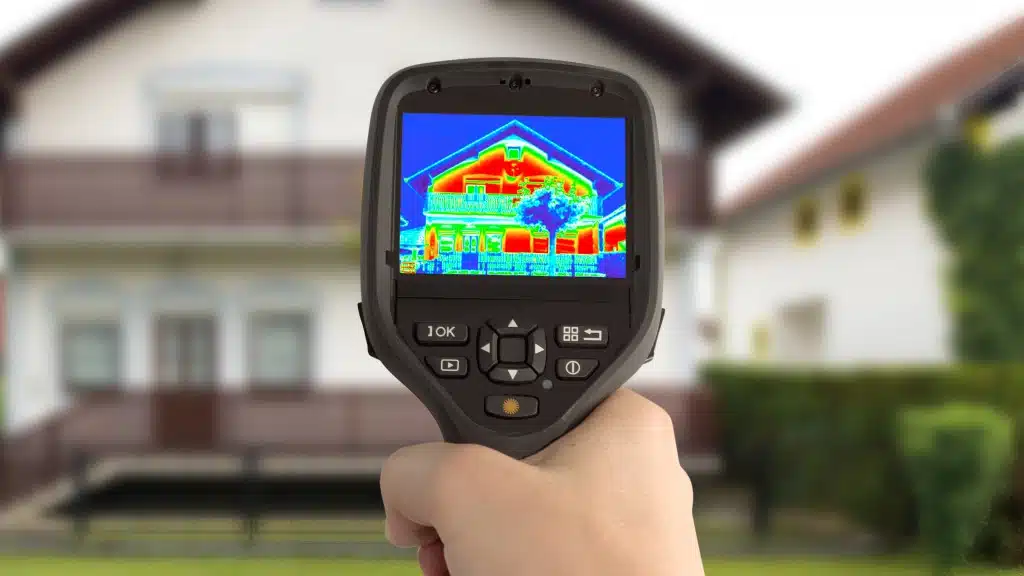
The global handheld thermal camera market is projected to grow significantly over the coming years, driven by rising demand for predictive maintenance, electrical inspections, workplace safety, and emergency response applications. According to a new report by MarketsandMarkets, the market is expected to increase from US$1.83 billion in 2026 to US$2.83 billion by 2032, representing a compound annual growth rate (CAGR) of 7.6%.
The growing adoption of thermal imaging technology across industrial sectors is being fuelled by the need for early fault detection, non-contact temperature monitoring, and improved safety management. Handheld thermal cameras enable maintenance teams to identify overheating equipment, electrical faults, insulation deficiencies, and mechanical wear before they develop into costly failures, unplanned downtime, or fire hazards.
As industries place greater emphasis on asset reliability and operational efficiency, thermal imaging has become an increasingly valuable tool in manufacturing, construction, energy, automotive, utilities, and public safety environments. The technology allows operators to monitor critical equipment and infrastructure in real time while reducing maintenance costs and improving workplace safety.
Electrical inspection is expected to remain the largest application segment within the market. Organisations are increasingly using handheld thermal cameras to detect overloaded circuits, loose electrical connections, failing components, and abnormal heat patterns within power distribution systems. The ability to inspect electrical panels, transformers, switchgear, motors, and other critical assets without physical contact provides an added layer of safety while supporting preventative maintenance programmes.
The report also highlights strong growth in direct-to-customer sales channels, particularly through manufacturer websites and online stores. Customers are increasingly favouring direct purchasing options that provide access to technical support, product demonstrations, product specifications, and specialised thermal imaging solutions.
Industrial users continue to account for the largest share of the market, with thermal cameras widely deployed across manufacturing plants, power generation facilities, oil and gas operations, automotive production sites, and utility networks. These industries rely on thermal imaging technology to improve equipment performance, monitor asset condition, and enhance worker safety around critical infrastructure.
For fire protection and emergency response professionals, handheld thermal cameras are becoming increasingly important in firefighting operations, building inspections, search and rescue missions, and surveillance activities. Their ability to provide immediate thermal visibility in challenging environments continues to drive adoption across public safety sectors.
As industries worldwide continue investing in predictive maintenance and safety technologies, the handheld thermal camera market is expected to remain on a strong growth trajectory. Advances in sensor technology, improved image resolution, and wider accessibility are likely to further expand the use of thermal imaging across a broad range of industrial and commercial applications.
Major companies operating in the global handheld thermal camera market include Teledyne FLIR, Fluke Corporation, Hikmicro, Testo SE & Co. KGaA, Guide Sensmart, Infiray, and Seek Thermal, all of which continue to develop innovative solutions aimed at improving inspection accuracy, reliability, and operational efficiency.
