

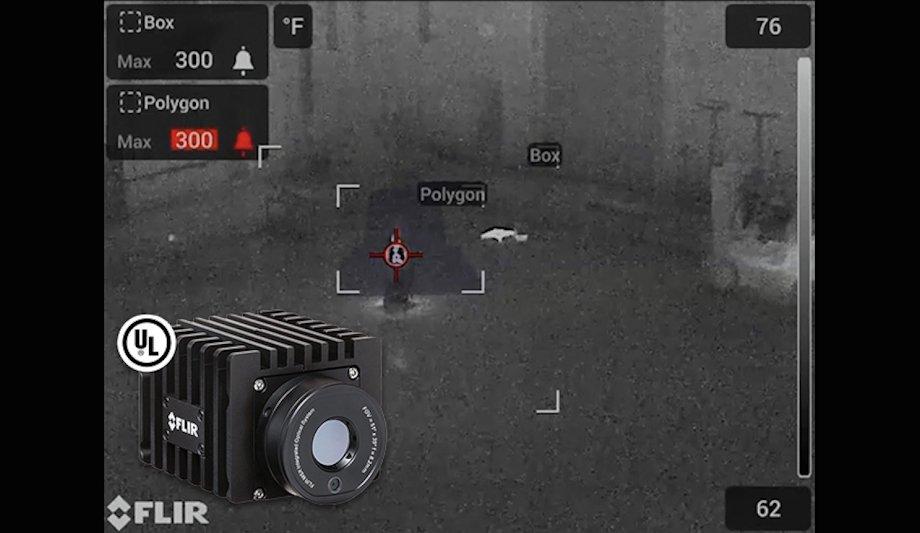
Teledyne FLIR’s A40 and A70 thermal imaging cameras have become the first models to achieve UL 2684 listing as thermal image fire detectors, establishing an independently evaluated benchmark for the technology.
The listing comes as the 2025 edition of NFPA 72 introduces a dedicated category for thermal image fire detection, providing greater clarity around the use of thermal imaging within fire alarm systems.
A New Benchmark for Thermal Fire Detection
The A40 and A70 are listed under ANSI/CAN/UL 2684, a joint US-Canadian standard covering video and thermal image detectors used in fire alarm systems.
The standard establishes requirements covering fire testing, environmental and electrical performance, and equipment durability.
The development is significant for fire protection engineers, insurers and asset owners evaluating thermal detection technology, particularly in industrial environments where identifying abnormal heat before visible signs of fire can provide valuable additional response time.
The UL listing does not replace local Civil Defence approvals or other project-specific authority requirements. Instead, it provides an independently tested reference point for assessing thermal image fire detection equipment.
Alignment with NFPA 72
The listing coincides with changes introduced in the 2025 edition of NFPA 72, the National Fire Alarm and Signaling Code.
Section 17.12 establishes a dedicated category for thermal image fire detection and requires thermal image fire detection systems to be listed for fire detection.
The development is particularly relevant to markets where NFPA standards play an important role in fire protection frameworks.
According to Teledyne FLIR, this includes the Gulf region, where NFPA codes are widely referenced and UL-listed equipment is commonly considered during project reviews.
Detecting Abnormal Heat Before Fire Develops
Thermal image fire detection is designed to identify developing hazards before conventional indicators such as smoke or visible flames appear.
The A40 and A70 continuously measure temperatures across their field of view. This allows operators to establish monitoring zones and identify conditions based on temperature thresholds, temperature differences and rates of temperature increase.
This capability can be particularly valuable in industrial facilities where machinery and electrical equipment routinely operate at elevated temperatures.
A change from normal operating conditions can provide an early indication that equipment requires inspection, maintenance or intervention.
Applications Across the Gulf
The technology has potential applications across a range of infrastructure and industrial environments in the Gulf region.
Potential applications include:
-
Petrochemical and refining facilities
-
Electrical infrastructure
-
Battery energy storage systems
-
Data centres
-
Solar installations
-
Manufacturing facilities
-
Logistics and distribution hubs
In these environments, early detection of abnormal heating could help identify issues such as loose electrical connections, deteriorating components or battery faults before they develop into fires or cause unplanned operational interruptions.
Thermal and Visible Imaging Combined
Teledyne FLIR’s Axx-Series combines thermal and visible imaging, with analytics processed directly on the camera.
When defined alarm conditions are reached, the cameras can initiate fire alarm events through compatible fire alarm control systems.
This enables thermal monitoring to become part of a broader fire detection strategy rather than operating as a standalone monitoring technology.
Importance for Fire Protection Stakeholders
The UL 2684 listing provides fire protection stakeholders with a recognised benchmark when assessing thermal image fire detection systems.
For engineers and system designers, it provides a clearer reference point when evaluating equipment against applicable fire codes. For insurers and asset owners, it offers independently evaluated performance information when considering early fire detection technologies.
Matthew Hasty, Global Vertical Director for Science, Automation, and Early Fire Detection at Teledyne FLIR, highlighted the importance of the new listing for the region.
“The question we get in this region is not whether thermal detection works. It is what the device is listed to, and how that fits the code the authority is working from. Until now there was no listing to point to. That has changed.”
As industrial facilities become more complex and the cost of fire-related downtime continues to rise, thermal image fire detection could play an increasingly important role in identifying abnormal conditions before they escalate.
