

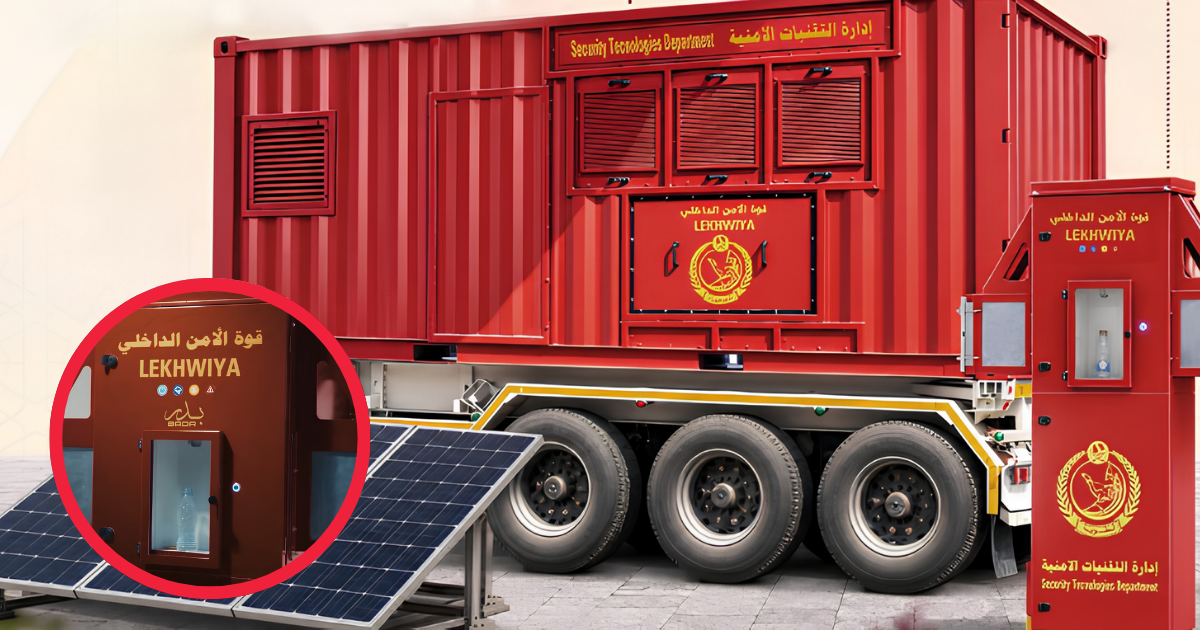
Qatar’s Internal Security Force (Lekhwiya) has developed Badr, a solar-powered system designed to produce drinking water from atmospheric moisture for emergency and field operations.
Developed by Lekhwiya’s Security Technologies Department, the system is intended to provide an independent source of potable water in locations where conventional water infrastructure is unavailable, disrupted, or potentially contaminated.
Badr is available in two configurations. The smaller indoor model can produce up to 200 litres of drinking water per day, while the larger system can generate up to 5,000 litres per day for higher-demand operational sites.
A key feature of the technology is its ability to operate in environments where chemical or radioactive contamination may be present. This capability could support emergency operations requiring an independent water supply when conventional sources are compromised.
The system is powered by solar energy, reducing its reliance on conventional electricity infrastructure and potentially enabling deployment at remote or temporary sites.
The development highlights the growing role of resilient water and energy technologies in emergency preparedness, particularly in situations where access to essential infrastructure may be limited.
The system was named Badr in memory of Badr Saad Mohammed Al Humaidi Al Dosari, an Internal Security Force officer killed while performing his duties during the Israeli attack on Doha on 9 September 2025.
