

Every fire protection system is ultimately judged by what happens in the first few seconds after a fire ignites. Those critical moments can determine whether a small incident is contained quickly or escalates into a major emergency. Yet the effectiveness of that initial response is shaped long before a fire occurs — through the engineering, design and optimisation of the protection system.
As industrial facilities grow in size and complexity, so do the systems required to protect them. Autonomous Robotic Fire Suppression Systems (ARFSS), such as Unifire AB’s FlameRanger™, integrate robotic nozzles, multiple fire detection technologies and distributed control systems to deliver a coordinated response.
Designing these systems requires more than selecting equipment and positioning components on a drawing. It demands a comprehensive engineering approach that considers how every element performs individually and as part of the complete system.
Engineering Beyond the Drawing Board
The challenge extends beyond determining whether a robotic nozzle can reach a specific location. Engineers must assess suppression coverage, detector visibility, nozzle selection, water utilisation, system redundancy and the coordinated response of the entire network.
Digital engineering provides the tools to address these challenges before installation begins.
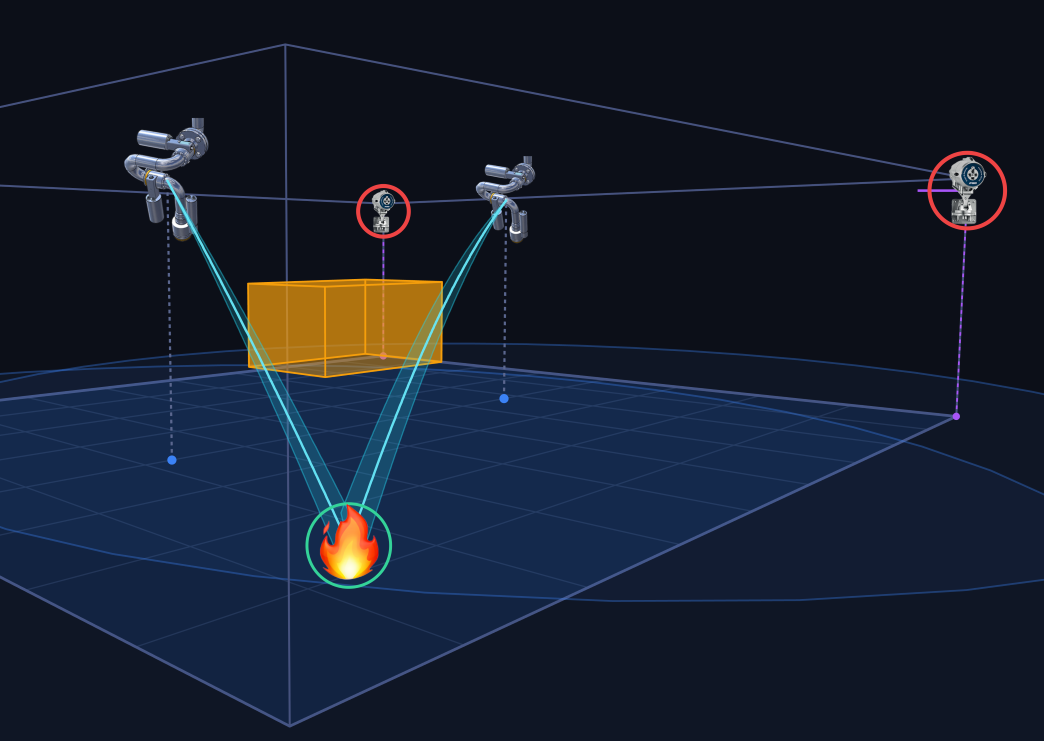
Unifire has developed a proprietary digital engineering environment to support the design, analysis, simulation, optimisation and documentation of complete FlameRanger™ systems in a virtual environment. By modelling facilities in three dimensions, engineers can evaluate nozzle reach, detector coverage, suppression overlap and potential blind spots before equipment is installed.
The greatest advantage lies in the ability to make better-informed engineering decisions. Alternative layouts, detection configurations, suppression strategies and redundancy levels can be evaluated efficiently, allowing engineers to compare design options and optimise system performance rather than simply meeting minimum design requirements.
This approach also gives facility owners, consultants and project stakeholders a clearer understanding of the technical implications of different design choices before committing to equipment procurement and installation.
Verifying Performance Before Installation
Simulation adds another critical layer to the engineering process. Virtual fire scenarios enable engineers to assess system behaviour and evaluate response strategies before commissioning.
Within the simulated environment, fire detection devices identify a scenario, the control logic determines the appropriate robotic nozzle response, and the proposed suppression strategy can be assessed and refined. This provides an opportunity to identify potential weaknesses and improve system coordination before the system is deployed.
Digital engineering also strengthens documentation and quality control. By generating engineering drawings, hydraulic calculations, detector layouts and bills of materials from a common engineering model, Unifire can improve consistency across project deliverables, accelerate documentation and reduce opportunities for discrepancies and errors.
From Digital Design to Real-World Protection
This engineering philosophy underpins the development and delivery of FlameRanger™ Autonomous Robotic Fire Suppression Systems. Unifire applies digital engineering from the earliest proposal stages, helping its engineers optimise detector placement, suppression coverage, network response and overall system design before the first component is installed.
As industrial fire protection requirements become more demanding, digital engineering is increasingly important in developing systems that are safer, more reliable and better prepared for real-world operating conditions.
The objective is clear: when a fire starts, the protection system must respond as intended, with its detection, decision-making and suppression strategies carefully engineered in advance.
The first 15 seconds are critical. The engineering that shapes them starts long before the first flame appears.
