

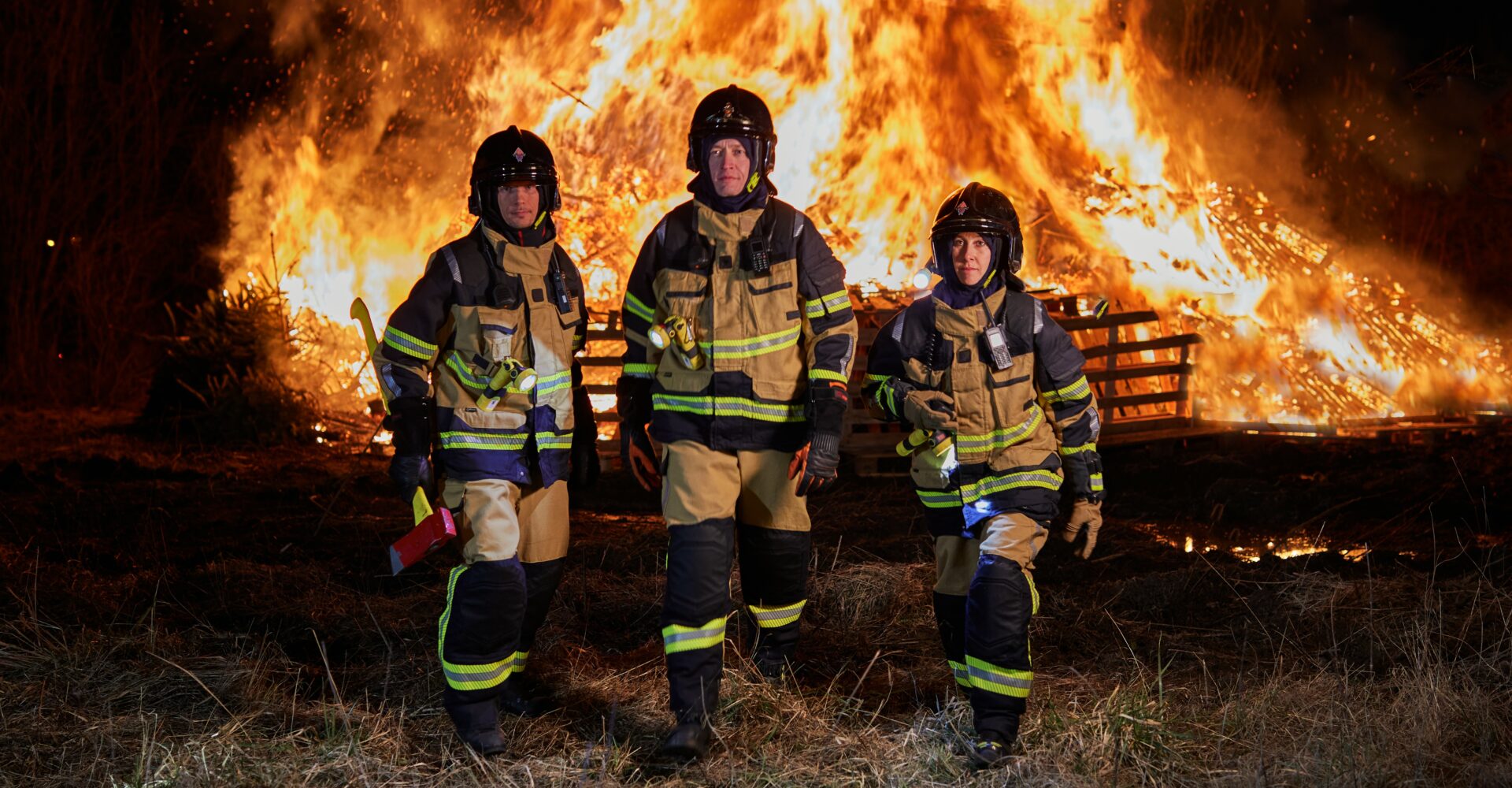
DuPont’s Alfons Held and Jian Xiang explore what firefighters should look for to help ensure they are investing in durable gear that will last
As a developer and manufacturer of fire-retardant fibres and fabrics, DuPont sits at an early stage in the value chain of firefighter gear. It is the manufacturer of two main brands of inherent flame retardant materials used in firefighting garments: fabrics made with Kevlar and Nomex aramid fibres. IFSJ spoke to Alfons Held, Global Marketing Manager for Emergency Response, and Jian Xiang, Global Technology Leader in Emergency Response at DuPont to learn about the latest developments in firefighting fabrics from DuPont.
Whilst not a garment manufacturer itself, DuPont works with weavers and garment manufacturers along the value chain to help ensure that the fabrics are meeting customer specifications. “We have technical development centres in each and every region where we can test features and benefits of the fabrics,” tells Held.
One of DuPont’s key testing protocols involves DuPont Thermo-man: a mannequin which is dressed in whatever gear is to be tested and blasted with fire to determine how much protection it offers, playing out the worst-case scenario to understand how well the firefighter would be protected.
With regards to durability and longevity, firefighters want to make sure that when they are investing and buying gear that will not only perform but last. Typically, turnout gear could face occupational wear and tear which could affect performance, whether its heat and fire exposure or rubbing up against sharp materials.
In recent years there has also been an increasing awareness towards gear contamination. The International Agency for Research on Cancer recently confirmed that occupational exposure to smoke as a firefighter has been classified as carcinogenic.
Driven by the concern about contaminated gear and the toxicity of smoke particles, Held says the rising concern surrounding decontaminating gear is completely new to some fire departments: “Decontamination puts a lot of stress on the garments to the extent that the firefighters are afraid of cleaning their gear. That’s exactly where we can step in and help support these departments by looking at materials and how they behave under frequent cleaning.”
The standards for cleaning gear have changed dramatically in recent times. “The frequency of washing gear has definitely increased dramatically,” says Xiang. “We’ve seen one fire department looking to wash gear 50 times per year. From our perspective, this really elevates the requirement for gear to be durable to wash and wear after every single thermal exposure. That really adds a lot of stress to specific fabrics.”
She says that DuPont is looking into every fibre that goes into a fabric and wants to ensure that it uses excellent fibres that are thermally strong, mechanically durable, UV sustainable and repeated wash resistant.
DuPont Nomex Xtreme Performance
Nomex has been in the market for more than 50 years and was one of the first fibres used in textile firefighter gear. In a bid to innovate, DuPont has recently launched Nomex Xtreme Performance, a new premier protection and performance solutions category for emergency responders. Nomex Xtreme Performance provides thermal protection and moisture management, along with protection from heat and flame, chemicals, cuts, and particulates for a comprehensive and game-changing solution for the next generation of firefighting PPE.
“We have a long-standing commitment to firefighter safety, and we continue to innovate to meet the evolving protection needs of the emergency response community. The Nomex Xtreme Performance category offers a superior choice for firefighter PPE, providing a wide range of benefits from comfort to durability to advanced thermal protection,” says Held.
Products made of Nomex and Kevlar fibre have been the backbone of the emergency response industry for the past 50 years. The Nomex Xtreme Performance category combines the benefits of Nomex, Kevlar and high-performance materials like PBO, Nomex Nano or Nomex Nano Flex. Nomex provides essential heat and flame resistance with the practical benefits of wash durability and abrasion resistance, softness and comfort, as well as aesthetic benefits that include multicolour design options. Along with providing trusted and foundational strength, Kevlar helps to make garments more lightweight and brings new levels of performance with improved heat and flame protection.
PBO offers heat-blocking properties and strength, which are characteristics that are essential in protective gear. After thermal protective performance (TPP) exposure, smart blend fabrics made of Nomex, Kevlar and high-performance materials like PBO show significantly higher strength retention and integrity, with proven performance as a garment component in firefighting applications.
Best performance at every level
Quality control exists at every stage of DuPont’s process. Xiang says: “When we’re looking into the fibre level, we make sure it’s the best of the best. We work to help weavers develop fabrics that meet or exceed their requirements. We test at every single step of the process to ensure we are delivering the thermal and mechanical performance their gear needs.”
Then, she says, they test it in a way that relates to firefighters: “What does the fabric look like and how does it behave before, during and after the fire? When we go through the whole cycle, the data tells us if we have created the best all round performance material. Because of the resilience of our fibres, we can work with fire departments to help reduce the weight of the outer shell and make the whole ensemble lighter and more mobile so firefighters are not restricted in their movement during firefighting.”
Most fire departments use their gear for an average of five to eight years. She adds that there is an increased concern that frequent washings could potentially reduce the lifetime of the garment. These concerns make the durability of the fabric even more important during development.
Contamination awareness
At INTERSCHUTZ, Xiang shares that one thing they learned from speaking to firefighters is that people are not as focused on extra thermal protection anymore. “For the past decade, people focused solely on what the TPP is,” she tells. “They make a big deal if the TPP is a 38 vs a 40. What has been happening recently is that their concerns are shifting towards sustainability and washing durability when cleaning their gear.”
Held adds that they have also notices changes in the procedures at fire departments where they are handling contaminated gear differently than in the past: “Firefighters will not go back in the truck with their contaminated gear. They will now put it in a plastic bag so that if it is heavily contaminated they will not contaminate their trucks. This has created many procedural changes in the fire station and the way they handle their gear.”
On their commitment to delivering the best fabric, Xiang adds: “As science leaders in the industry, we really work to understand the firefighters’ needs. We are intimately engaged with our firefighters on a daily basis, communicating and engaging in conversations not only to understand their unmet needs but also communicating what we know and the information we gather because it is such a complicated industry to know what to look for in terms of personal protective equipment.”
