
As healthcare facilities continue to expand their digital capabilities and provide round-the-clock patient care, protecting people, assets, and sensitive information has become more complex than ever. Hospitals, clinics, pharmacies, and specialist healthcare centres now require security systems that do far more than control who enters a building. Increasingly, healthcare providers are adopting integrated physical security solutions that combine access control, video surveillance, and mobile credentials to create safer, smarter, and more resilient healthcare environments.
Unlike traditional standalone systems, integrated access control enables healthcare organisations to monitor and manage security across multiple departments while supporting uninterrupted medical operations.
Protecting High-Risk Areas
Healthcare facilities consist of a wide range of environments, each with unique security requirements. Public areas such as waiting rooms must remain welcoming and easily accessible while still protecting patients, visitors, and staff from potential security risks.
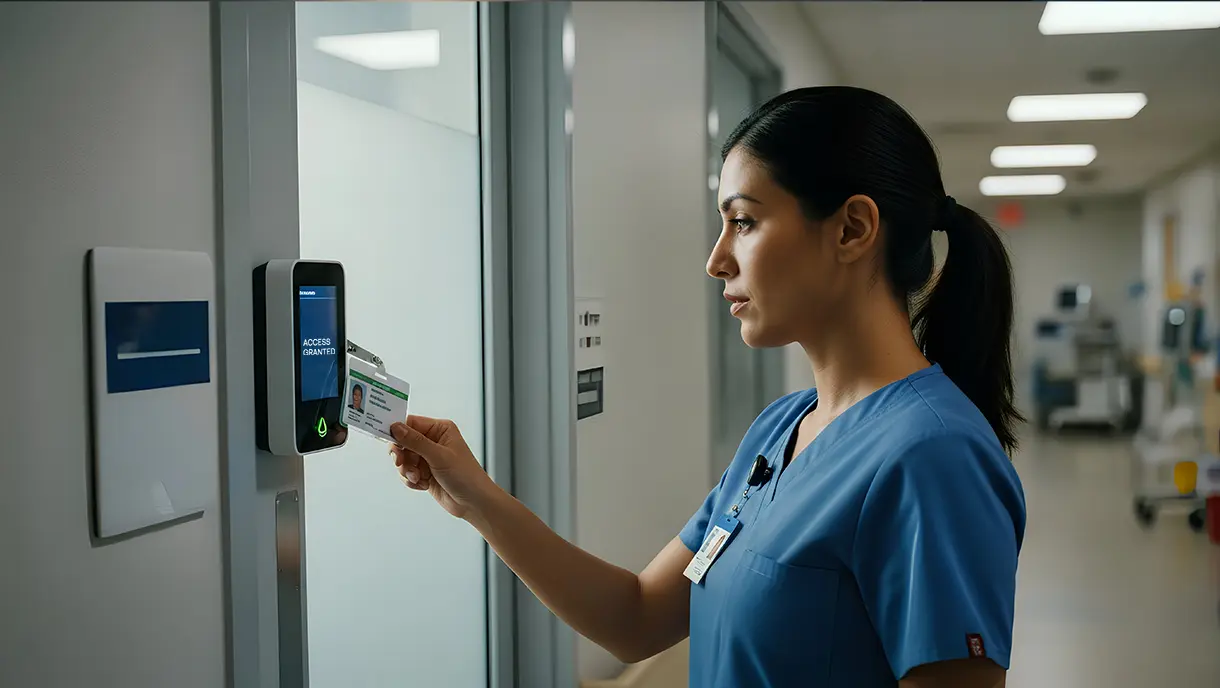
Restricted areas require a much higher level of protection. Pharmacies, medicine storage rooms, laboratories, operating theatres, emergency departments, neonatal intensive care units, and data centres all contain valuable equipment, controlled substances, or sensitive patient information that must only be accessible to authorised personnel.
Effective access control systems ensure that only approved staff members can enter these critical spaces, reducing the risk of theft, unauthorised access, and operational disruption.
Combining Proactive and Reactive Security
Modern healthcare security extends beyond preventing unauthorised access. By integrating access control with video management systems (VMS), healthcare organisations can respond more effectively when security incidents occur.
For example, if a former employee attempts to access a restricted area using an inactive credential, the access control system immediately records the denied entry and alerts security personnel. When integrated with video surveillance, security teams can instantly review the associated footage, verify the incident, and take appropriate action without relying solely on witness accounts.
This combination of proactive access management and real-time visual verification strengthens overall security while improving incident response times.
Mobile Credentials Improve Operational Efficiency
Healthcare professionals often work in high-pressure environments where every second matters. Traditional access cards, key fobs, and identification badges can be misplaced, forgotten, or stolen, potentially delaying access to critical treatment areas.
Mobile credentials provide a more secure and convenient alternative by allowing authorised staff to use their smartphones as digital access keys. This reduces the administrative burden associated with managing physical credentials while enabling healthcare workers to move quickly between secure areas without compromising security.
The technology also simplifies credential management, allowing administrators to issue, update, or revoke access permissions remotely whenever staff roles change.
Protecting Sensitive Data
Physical security has become an essential component of cybersecurity within healthcare organisations. Server rooms, IT infrastructure, and medical records storage areas house confidential patient information, financial records, and operational data that are increasingly targeted by cybercriminals and insider threats.
Restricting physical access to these areas forms the first line of defence against data breaches. Strong access control measures help prevent unauthorised individuals from tampering with critical systems or accessing sensitive information, supporting compliance with healthcare data protection regulations and strengthening overall organisational security.
Ensuring Continuous Protection
Healthcare services cannot afford security failures caused by power outages or network interruptions. Modern integrated access control systems are designed with backup batteries, controller redundancy, and fail-safe operation to ensure continuous protection during unexpected disruptions.
This resilience allows hospitals and healthcare facilities to maintain secure operations without interrupting patient care, even during emergency situations.
Building Safer Healthcare Environments
As healthcare organisations continue to digitise operations and expand their facilities, integrated access control has become a strategic investment rather than simply a security upgrade. By combining intelligent access management, video surveillance, mobile credentials, and resilient system architecture, healthcare providers can better protect patients, staff, assets, and sensitive information while maintaining the efficiency required for high-quality medical care.
Integrated security solutions not only reduce operational risks but also provide healthcare organisations with the confidence to deliver uninterrupted services in an increasingly complex security landscape.
