

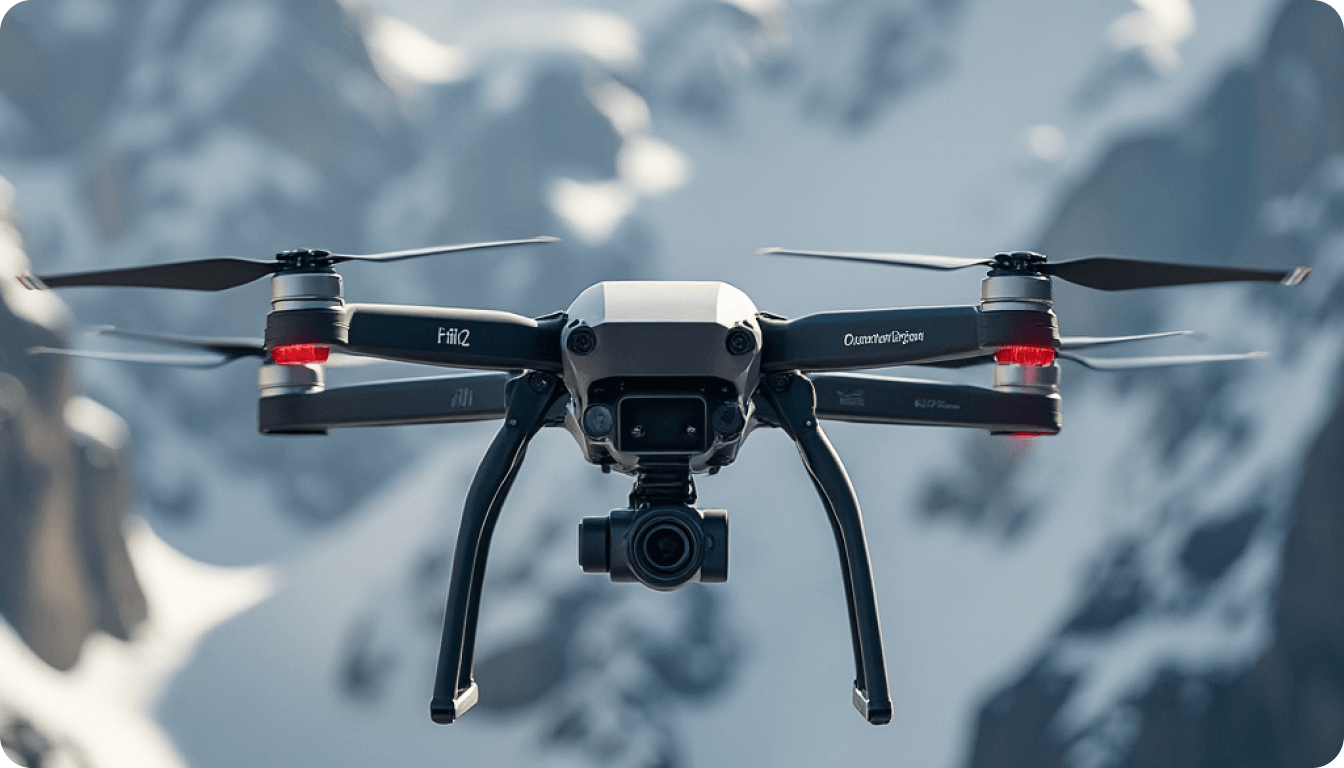
Canada has established itself as one of the world’s leading centres for drone development and testing, combining advanced technology, supportive regulations, and diverse operating environments to accelerate innovation across the unmanned aerial vehicle (UAV) sector. From agriculture and mining to logistics, infrastructure inspection, and emergency response, drones are rapidly transforming how industries operate, collect data, and improve efficiency.
The country’s vast and varied geography provides an ideal testing environment for drone manufacturers and technology developers. With landscapes ranging from dense urban centres and remote wilderness to mountains, forests, and Arctic regions, Canada offers real-world conditions that challenge and refine drone capabilities. Harsh winters, strong winds, and extreme temperatures further help manufacturers develop robust systems capable of operating reliably in some of the most demanding environments on the planet.
Modern drones have evolved far beyond recreational devices. Today’s systems are equipped with advanced technologies such as artificial intelligence (AI), GPS navigation, thermal imaging, LiDAR sensors, machine vision, and real-time data analytics. These capabilities enable drones to perform complex industrial tasks with greater accuracy, speed, and efficiency. Through extensive testing programmes, developers continue to improve drone reliability, autonomous decision-making, battery performance, and operational safety.
A key factor behind Canada’s success in drone innovation is strong government support. Transport Canada has developed a regulatory framework that balances public safety with technological advancement, creating a clear pathway for research, testing, and commercial deployment. In addition, partnerships between government agencies, universities, and private technology companies continue to drive research and accelerate the commercialisation of new drone technologies.
The agricultural sector is among the biggest beneficiaries of drone innovation. Farmers increasingly rely on drones to monitor crop health, assess irrigation needs, detect disease outbreaks, and optimise fertiliser application. Access to real-time aerial data allows producers to make more informed decisions while improving productivity and reducing operational costs.
Canada’s mining industry has also embraced drone technology. Mining companies use drones for site surveying, stockpile measurements, environmental monitoring, equipment inspections, and safety assessments. By providing access to hazardous or hard-to-reach areas, drones help reduce risks to workers while improving operational efficiency and data accuracy.
In construction and infrastructure management, drones are becoming essential tools for land surveying, project monitoring, building inspections, and asset management. The technology enables organisations to gather detailed information quickly and accurately, reducing the need for labour-intensive inspections and improving project oversight.
The logistics sector is another area experiencing rapid drone development. Companies are testing drones for package delivery, medical supply transport, emergency logistics, and servicing remote communities. As drone capabilities continue to improve, the technology is expected to play an increasingly important role in modern transportation networks, particularly in regions where conventional infrastructure is limited.
Safety remains a primary focus of Canadian drone testing programmes. Engineers are continuously refining technologies such as obstacle avoidance systems, collision detection, autonomous navigation, and emergency landing functions. These advancements are helping drones integrate safely into shared airspace while reducing risks to people, property, and other aircraft.
Beyond commercial applications, drones are also becoming valuable assets in defence and public safety operations. Equipped with advanced sensors, thermal cameras, and AI-powered analytics, drones are increasingly used for border surveillance, disaster response, search-and-rescue missions, and infrastructure protection. These capabilities provide authorities with real-time situational awareness while reducing operational risks.
Despite the industry’s rapid growth, challenges remain. Extreme weather conditions continue to test drone durability and performance, while concerns around privacy, cybersecurity, and data protection require ongoing regulatory attention. Industry stakeholders and policymakers are working together to address these issues while maintaining an environment that encourages innovation.
Artificial intelligence is expected to drive the next major phase of drone development. AI-powered systems can recognise objects, analyse environments, optimise flight paths, and make autonomous decisions in real time. As these technologies mature, drones will become increasingly intelligent, efficient, and capable of performing more complex tasks across multiple industries.
With its strong research ecosystem, supportive regulatory environment, and growing commercial adoption, Canada has positioned itself at the forefront of global drone innovation. As industries continue to embrace automation and autonomous systems, Canadian drone testing will remain a critical driver in the development of safer, smarter, and more capable UAV technologies for the future.
